
A high-performance sales culture rarely happens by accident. You can hire talented people, set ambitious targets, and still end up with inconsistent results if the day-to-day environment doesn’t support the right behaviors.
We’ve seen this pattern across many teams. The difference between average and strong cultures usually comes down to a few practical things leaders do (or don’t do) consistently. When those pieces are in place, performance becomes more predictable. When they’re missing, even capable reps struggle.
Here’s what we’ve found works when building a high-performance sales culture and where Success Vitamin often fits in.
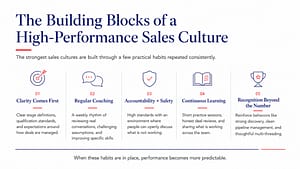
Clarity Comes First
People perform better when they know exactly what “good” looks like. That means clear stage definitions, qualification standards, and expectations around how deals should be managed.
Without shared standards, every conversation about performance becomes subjective. With them, coaching stays grounded in evidence instead of opinions. The best teams treat this clarity as non-negotiable.
Coaching Has to Be Regular, Not Occasional
One of the biggest gaps we see is the gap between knowing that coaching matters and actually doing it consistently. High-performing cultures make coaching a weekly rhythm, not something that happens only when numbers slip.
Managers who regularly review real conversations, challenge assumptions, and help reps improve specific skills create faster development and stronger ownership. This is hard work, and many managers need support to do it well.
Accountability and Safety Have to Coexist
Strong cultures hold people to high standards while still making it safe to talk about what’s not working. If people only feel safe celebrating wins, problems stay hidden. If the environment feels purely punitive, people stop taking smart risks.
The healthiest teams we’ve worked with do both: they celebrate progress and learning, and they still expect clear standards to be met.
Quick Read – Why Sales Teams Fail Even After Attending Multiple Sales Training Programs
Learning Needs to Happen Continuously
A single training workshop rarely changes much on its own. The teams that improve over time build learning into their regular cadence, short practice sessions, honest deal reviews, and sharing of what’s working across the group.
This kind of ongoing development compounds. It also reduces the “flavor of the month” feeling that kills training investment.
Recognition Matters Beyond Just the Number
Money is important, but it’s not the only lever. Noticing and reinforcing specific behaviors, thorough discovery, clean pipeline management, thoughtful multi-threading, shapes culture more than many leaders realize.
When people see that the right actions get recognized, those actions become more common.
Suggested Read – 10 Ways Sales Coaching Converts Sales Challenges into Opportunities
Where Success Vitamin Fits
Knowing what a high-performance culture should look like is one thing. Building and sustaining it is another. Many organizations struggle most with consistent coaching, manager capability, and turning training into real behavior change.
This is the space where Success Vitamin, led by sales advisor Pritha Dubey, often adds value. Through focused coaching programs, corporate training, and work with sales leaders, they help teams strengthen the practical habits that support culture, especially around coaching rhythms and skill development.
Their approach tends to sit close to the day-to-day reality of selling rather than remaining purely theoretical, which is usually where lasting change happens.
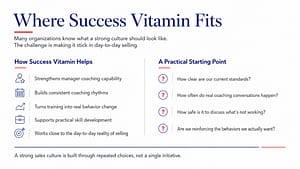
A Practical Starting Point
You don’t need to overhaul everything at once. Start by looking at a few simple questions:
- How clear are our current standards?
- How often do real coaching conversations happen?
- How safe is it for people to discuss what’s not working?
- Are we reinforcing the behaviors we actually want?
The answers usually point to the highest-leverage next steps. And when internal bandwidth is limited, bringing in the right external support can accelerate progress.
A strong sales culture is built through repeated choices, not a single initiative. The teams that treat it that way tend to pull ahead and stay ahead.