
B2B buying doesn’t look the way it used to. Buyers come into conversations already informed, often with a shortlist in mind, and usually with several other people who need to agree before anything moves forward.
We’ve watched this play out across a lot of sales teams. Reps feel like they’re showing up later in the process. Deals stall more easily. And the old playbook of educating the buyer from scratch simply doesn’t land the way it once did. Understanding the modern B2B buyer’s journey has become essential if teams want to stay effective.
What’s Actually Changed
Most of the early research now happens without sales involved. Buyers use search, peer conversations, reviews, and increasingly AI tools to figure out their options. By the time they speak to a salesperson, many already have a working view of what they need and which vendors might fit.
The process is also messier. More stakeholders join at different points. Priorities shift. Internal alignment takes longer. A surprising number of deals end in “no decision” rather than a clear win or loss for any particular vendor.
The broad stages of awareness, consideration, and decision still exist. But the time spent in each, the number of people involved, and the sources of information have all shifted.
What This Means for Sales Teams

Sales has to add real value when it finally gets involved.
Generic product overviews don’t work well when the buyer has already done homework. The better conversations diagnose the specific situation, surface risks the buyer may not have fully considered, and help the group move toward clarity. Buyers still need help, just not the kind of help that assumes they know nothing.
One champion is rarely enough.
Most meaningful B2B purchases now involve multiple people with different concerns. Relying on a single contact is risky. Teams that deliberately map the buying group and build relationships across roles tend to keep deals moving when one person goes quiet or changes jobs.
Marketing and sales have to stay aligned.
Buyers consume a lot of content before they talk to anyone. If the story they read online and the conversation they have with sales feel disconnected, trust drops. Salespeople need easy access to the right insights, proof points, and competitive context that match where the buyer actually is.
Helping the group decide matters as much as selling the solution.
Many deals stall because the buying committee can’t get aligned. Salespeople who can help surface concerns, reduce perceived risk, and support internal consensus create more progress than those who only push for the next meeting or the signature.
Quick Read – 4 Clear Scenarios When a Business Need a Fractional Sales Consultant
What Stronger Teams Are Doing
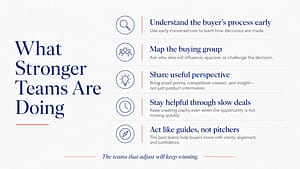
They treat early conversations as a chance to understand the buyer’s process, not just to qualify the opportunity. They ask better questions about how decisions get made and who else needs to be involved. They share a useful perspective that helps the buyer look credible inside their own organization. And they stay helpful even when the deal isn’t moving at full speed.
The modern B2B buyer’s journey rewards sales teams that act more like guides than traditional pitchers. Buyers still need support; they need it with clarity, alignment, and confidence.
Teams that adapt how they engage, multi-thread relationships, and support decision-making usually build healthier pipelines. Those that keep selling as if the buyer still depends on them for most of the information will keep running into the same friction.
The change is already here. The teams that adjust will keep winning. The ones that don’t will keep wondering why deals feel harder than they used to.